Why I wrote this book
It's a great story. Tracing actual events in Japan, the United States and Canada in 1941, The Admiral's Daughter captures the hubris, fears, and excitement of the time.
The novel shines a light on the world during this period. The scandalous romance between a Japanese woman and a white man. A black sailor struggling to find a meaningful role in a segregated American navy. The inner workings of the Japanese government, where the bombastic goals of imperial expansion lead to horrific wars.
It's also a cautionary tale. In the novel, a family of Japanese-American fishermen in Hawaii are struggling to earn a living in the face of rising tensions in the Pacific Ocean. The book asks the question: During times of conflict, is it acceptable to suspend civil rights and have the military run our society?
You can order your copy directly on Amazon
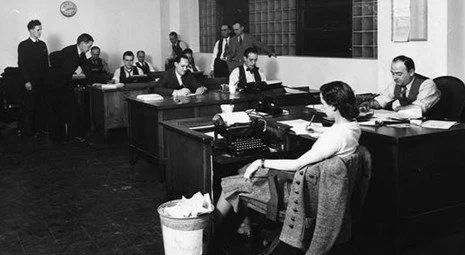
A lone female reporter in the newsroom just before the outbreak of war
The Star-Bulletin: A dash of humour
The year 1941 was dark, with much of the world at war and additional countries on the brink. I wanted to introduce some levity and created two characters who laboured at the Honolulu Star-Bulletin. There's Ruth Callahan, a chain-smoking, bourbon-swigging, church-going copy editor in charge of handling the column by Miss Dorothy Dix, who offers dubious advice to the lovelorn. And her friend, Milly Schmidt, a reformed robbery getaway driver now covering the courts, informs readers about the latest bad guys being sent up the river. They're the only two women in a male-dominated newsroom. It's an uphill climb against those who think the fairer sex has no business reporting on grisly crime and war.
How I wrote this book
The Admiral's Daughter is based on the true story of my father, who after graduating from high school, was assigned to work at the British Embassy in Washington. There he decoded Top Secret cables from Prime Minister Winston Churchill, who was desperate to bring the United States into the war. However, my father did not fall in love with a young Japanese woman or become entangled in espionage and intrigue. That part is fictional.
I read dozens of books on the Second World War, traveled to London to tour the underground Churchill War Rooms and visited Japan during cherry blossom season. The archives of the Honolulu Star-Bulletin and Life magazine were vital in capturing the challenges and joys that everyday people faced as the conflict loomed.
Even with all this research, it can be difficult to accurately portray another country's culture, especially one as complex as Japan's. For this I am indebted to my friend Kahoru Hoshi of Tokyo, who provided vital feedback to my drafts and offered suggestions on the characters.